18-Hour Dispatch Lag
Orders sat in pending queues waiting for once-daily manual CSV warehouse exports.
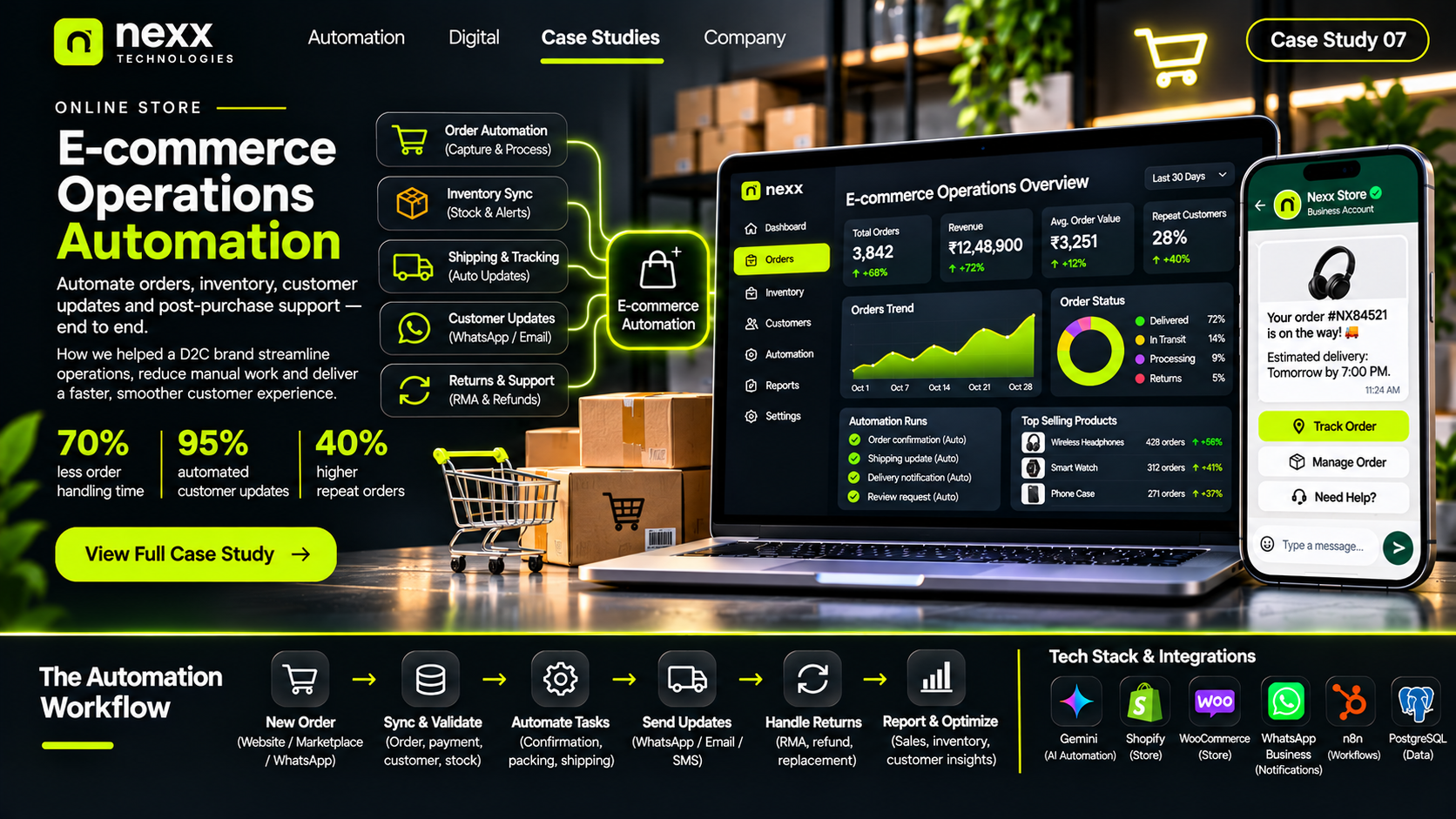
Accelerating order-to-warehouse dispatch from 18 hours to under 3 minutes with automated carrier rate-shopping and self-service returns.
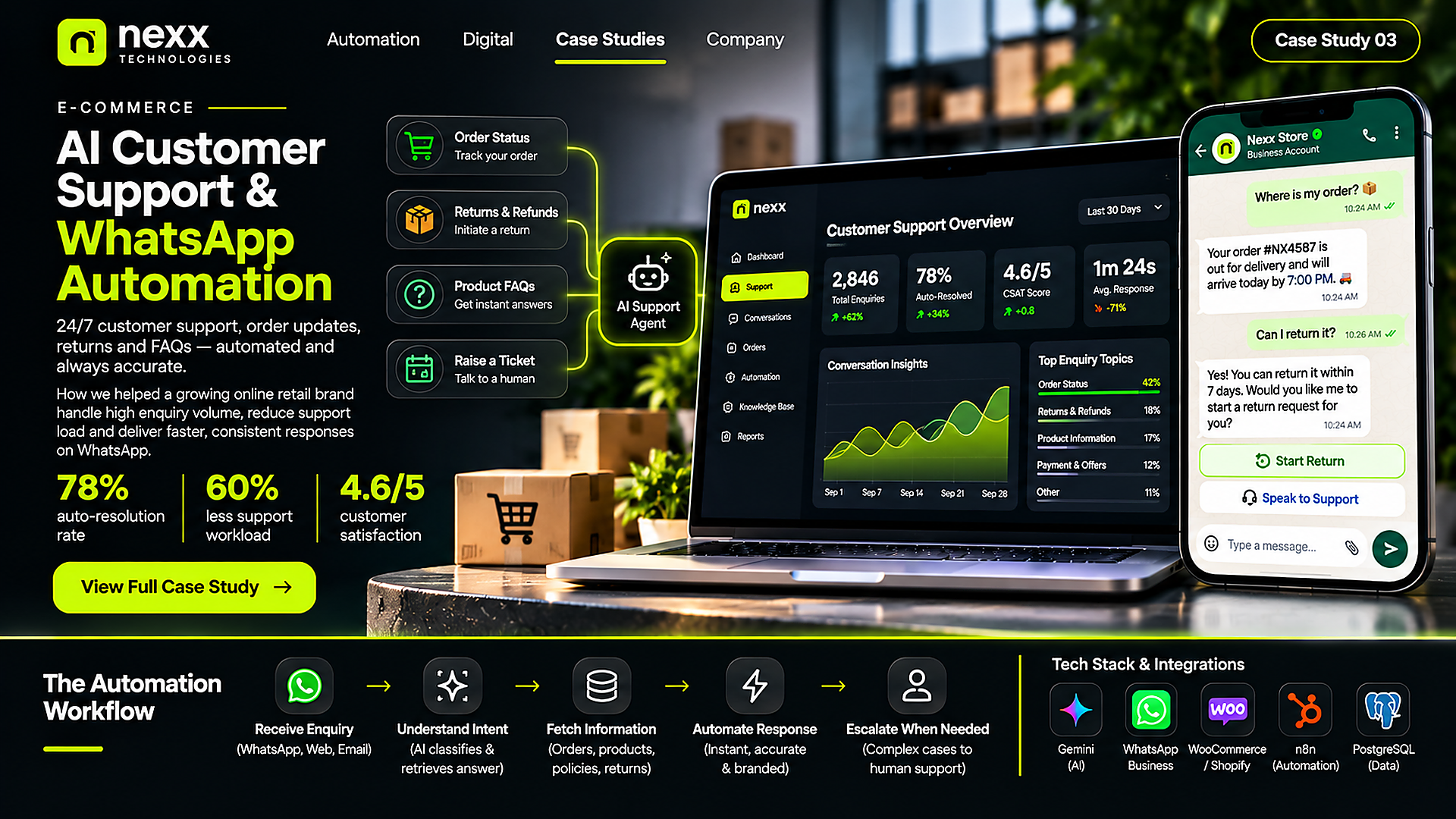
A scaling direct-to-consumer apparel and footwear brand shipping 25,000+ monthly orders struggled with operational bottlenecks between Shopify Plus, a 3PL warehouse, shipping carriers, and customer returns. Staff spent hours manually uploading CSV files, shipping numbers failed to sync, and customer returns took 14 days to process.
Core operational parameters, operational footprint, and scope of automation implementation.
Manual CSV fulfillment exports, stock desynchronization, and prolonged customer return turnarounds.
Autonomous event-driven fulfillment orchestration engine with self-service return label generation.
Relying on manual batch exports created severe order fulfillment delays, frequent address delivery failures, and customer frustration over return processing.
Orders sat in pending queues waiting for once-daily manual CSV warehouse exports.
Invalid customer address formats resulted in costly return-to-sender freight charges.
Customers waited up to two weeks for warehouse staff to manually inspect and refund returns.
High operational costs, customer chargebacks, and an estimated $3.20 in excess administrative labor per order fulfilled.
Shoppers experienced delayed tracking notifications and long delays receiving return refunds or replacement sizes.
Before operations automation, order handling was restricted to rigid once-daily batch operations.
Operations manager exported pending Shopify orders into CSV spreadsheet at 4:00 PM.
Manager manually reviewed flagged international addresses and apartment numbers.
File uploaded via SFTP; warehouse pick-and-pack delayed until next morning shift.
Tracking numbers downloaded next evening and uploaded back to Shopify.
During Black Friday and peak sales events, the manual workflow collapsed under order volume spikes.
Nexx Technologies engineered an event-driven operations orchestration engine connecting storefront checkout, warehouse management systems, dynamic carrier rate shopping, and an automated self-service returns portal.
Automated postal address correction and fraud risk classification scoring before warehouse release.
Order dispatch latency reduced from 18 hours to under 3 minutes with 99.9% inventory sync accuracy.
Integrated Shopify Plus webhooks, 3PL warehouse APIs, EasyPost/ShipStation, and Gorgias Helpdesk.
Orders with high fraud risk scores (> 0.8) are automatically held in review for risk manager sign-off.
Real-time pipeline handling every stage from checkout to automated return delivery.
Real-time webhook triggers pipeline within 2 seconds of customer payment authorization.
Validates postal deliverability and runs fraud scoring against risk thresholds.
Pushes pick-and-pack instructions to closest regional warehouse holding stock.
Selects optimal carrier (FedEx, UPS, DHL), prints label, and updates storefront.
Customer initiates return portal request; system issues prepaid label and dispatches exchange upon scan.
High-throughput fulfillment automation architecture with guaranteed delivery.
Coordinates real-time webhooks, carrier API rate-shopping, and warehouse status sync.
Maintains live order fulfillment status and multi-location inventory balances.
Generates live shipping labels and parses real-time transit milestones.
Self-service portal generating automated return shipping labels and tracking exchanges.
Radical reduction in order handling latency and customer return friction.
18 hours average delay waiting for batch CSV export.
Under 3 minutes automated pipeline execution.
3.4% returned to sender due to formatting errors.
0.1% delivery failure with automated postal scrubbing.
12-14 business days manual inspection.
Under 24 hours from carrier drop-off to replacement shipment.
High administrative overhead ($3.20 per order).
Sub-$0.35 automation maintenance cost per order.
Realistic operational modeling based on high-volume direct-to-consumer e-commerce benchmarks.
From checkout completion to warehouse pick-list generation.
Labor savings in manual sorting, labeling, and CS inquiries.
Automated customer exchange dispatch upon return carrier scan.
Real-time stock balance across multiple warehouse locations.
Enterprise security guardrails preventing duplicate shipping and fraudulent chargebacks.
Encrypted webhook secrets verifying that order payloads originate exclusively from Shopify servers.
Postal address database validation verifying street, suite, and postal code accuracy before label purchase.
Rate-limiting buffers preventing carrier API call limits during flash sale volume surges.
Automatic carrier failover switching from FedEx to UPS if primary carrier API experiences downtime.
Strict idempotency keys based on order ID preventing accidental duplicate warehouse dispatches.
High-risk fraud orders held automatically for manual risk team review before warehouse release.
Expanding fulfillment automation to handle international cross-border expansion.
Automated electronic generation of commercial invoices and tariff codes for international customs.
Dynamic inventory lead-time modeling adjusting safety stock based on supplier delivery pacing.
Fulfilling online orders from retail storefront inventory when local delivery is faster.
Connect your storefront, warehouses, and carriers into an autonomous fulfillment engine that scales with your growth.